Pet Cosmetics Guide: Legislation, Safety, and Differences from Human Cosmetics
Table of Contents
Introduction
The Pet Cosmetics Guide It is a comprehensive guide to everything one needs to know about pet cosmetics. Although they resemble human cosmetics in terms of their purpose—namely, cleansing, grooming, and enhancing appearance—they differ significantly in both the legal framework and technical requirements. In this guide, we’ll explore: what is considered a pet cosmetic, what the boundaries are between grooming products and pharmaceuticals, what the current legal framework is in Europe and Greece, and what practices ensure safe and reliable products.
What Are Pet Cosmetics?
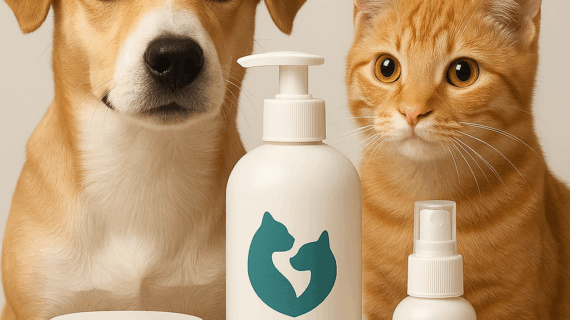
Pet care or grooming products are intended exclusively for pet care, hygiene, and grooming. Examples:
- shampoo for hair,
- conditioner,
- glow spray,
- deodorants and grooming products.
They may not be attributed therapeutic claims the biocidal action. A product that claims to «clean, soften, and make combing easier» is considered a pet cosmetic. Conversely, if it claims to «treat dermatitis» or «kill fleas,» then it is classified as a biocide or a veterinary drug.
Legal Framework in the EU and Greece
Cosmetics for humans
Pet Cosmetics
- They are not subject to Regulation 1223/2009.
- CPNP is not required.
- In many countries, they are classified as “pet grooming products.”.
- However, the same safety tests (stability, challenge test, microbiology) are required.
Products with biocidal properties
Products with therapeutic claims
In Greece, the EOF It is the competent authority for cosmetics intended for human use. For products intended for animals, the Veterinary Service of the Ministry of Rural Development. Since verbal interpretations often differ, it is best practice to always ask written confirmation.
International references and guidelines
Technical Prerequisites for Pet Cosmetics
Although CPNP is not required, the safety standards remain the same as those of humans:
- Microbiological testing.
- Stability (temperature, light, time).
- Challenge test.
- Safety Assessment of Ingredients.
- Packaging is safe and pet-friendly.
Differences Between Human and Animal Cosmetics
| Use: |
pH of Human Cosmetics |
pH in Animals |
| Face |
4.5 – 5.5 |
– |
| Hair |
4.0 – 6.0 |
– |
| Body |
5.0 – 6.0 |
6.5–7.5 (depending on the type) |
| Dog – leather |
– |
6.2 – 7.4 |
| Dog/Cat – paw |
– |
7.0 – 8.0 |
Important: Animal skin is more neutral to slightly alkaline compared to human skin. A human shampoo may be irritating or unsafe for use on animals.
Label & Claims
- Avoid making medical claims («cures,» «antimicrobial,» «fights parasites»).
- Use functional claims: «cleans,» «softens,» «improves the appearance of the hair.».
- Safety precautions: «Avoid contact with eyes,» «Discontinue use if irritation occurs.».
- Batch number, expiration date / PAO.
Frequently Asked Questions (FAQ)
Are pet cosmetics the same as those for humans?;
No. They differ in pH and in the legal framework.
Can I use human shampoo on my dog?;
No, because the pH is different and may cause irritation.
Do they need a Patient Information Form (PIF)?;
It is not legally required, but it is recommended as a best practice.
Conclusion
The Pet Cosmetics Guide This demonstrates that pet cosmetics constitute a distinct product category. They are similar to human cosmetics in terms of quality controls, but differ legally (e.g., CPNP, physicochemical requirements). Their safe development requires:
- Safety tests.
- Good point.
- Avoid claims regarding therapeutic or biocidal effects.
- Written confirmation from the competent authorities.
To view all of our services, visit the page Services.
In the Anemoesa Lab We handle the research, development, and production of pet cosmetics using the same strict standards we apply to human products. If you’re interested in a private-label partnership or in developing a new grooming product, please contact us.
Disclaimer
This article is for informational purposes only. It does not replace advice from a veterinarian or relevant authorities. For safety and guidance, please feel free to consult our lab—we’re here to help you review the products and make the right choices.
@anemoesa_lab
🐾Many people ask us about pet care products 🐾. ✔ If you have a pet, find out what you need to know about shampoos and grooming products. ✔ If you want to create pet cosmetics, here you’ll find answers that are hard to find elsewhere. Check out our article on anemoesa.com …and of course, we’re here to help with any questions or collaboration opportunities. #petcosmetics # Pet Cosmetics #petcare
♬ Original sound – Anemoesa_Lab