The History of Cosmetics: From Antiquity to the Modern Era
Introduction
The use of cosmetics is an integral part of human history, reflecting cultural, social, and technological developments. From ancient rituals to modern beauty industries, cosmetics have played a significant role in human society.
Early Accounts in the Ancient World
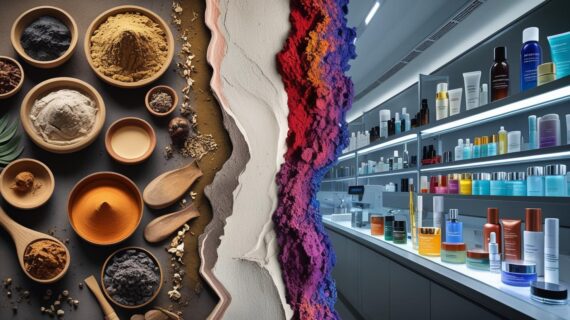
The earliest evidence of cosmetic use dates back to ancient civilizations. In Ancient Egypt (about 5,000 years ago), people took care of their personal hygiene and appearance; they used aromatic oils, white powders (as sunscreen), and a black mixture called «kohl» (lead-based eyeliner) for their eyelids. In particular, the Egyptians also produced blue pigments (the famous “Egyptian blue”). Similarly, in the eastern states of the Sumerians (Mesopotamia), women and men used red pigments (e.g., lipstick made from crushed metallic minerals) as early as 3500 B.C. In South Asia, it was common to use plant-based henna (a red dye derived from henna leaves) on nails and hair. In Ancient China, women of the Song Dynasty applied a powder made from rice and talc to whiten their faces (a symbol of social status). Furthermore, among the peoples of Central America (e.g., the Aztecs), people painted their faces and bodies with yellow, red, or black minerals for rituals: each color had a mystical meaning (e.g., yellow symbolized “transformation” and maturity). Aztec cosmetics were made from natural materials (soil, plants, seeds) mixed with oils. Similarly, in classical Ancient Greece and Rome, the use of cosmetics was widespread (e.g., elegant dyes, whitening powders made from lead or sulfur). According to sources, Roman women preferred white skin achieved with a lead-based foundation (ceruse) and bright red lips created with red mercury.
Social, religious, and political significance
Throughout history, the use of cosmetics has had dimensions that go beyond aesthetics. In Ancient Egypt, it was considered a mystical charm: texts mention that black eyeliner played a «magical» role and that the gods Horus and Ra protected the wearer from illness. Furthermore, both men and women—from servants to the royal court—wore eye makeup. Cosmetics were even used in burials (mummies) with the belief that they would «make the soul attractive in the underworld.» In contrast, in classical Rome, a pale and «waxy» complexion was a sign of high social status. Glamorous, artificial appearances were often criticized as dishonorable or shameful; for example, the Vestal Virgins were forbidden to appear «made up,» so as not to tarnish their purity. Philosophical sources also mocked excessive makeup (Juvenal said it led to adultery).
In the 20th century, the use of cosmetics took on a socio-political dimension: for example, the suffragettes adopted dark red lipstick as a symbol of strength and liberation. When the women’s rights movements emerged in the 1960s and 1970s, a segment of the feminist movement (Women’s Liberation) denounced beauty standards as coercive and «patriarchal.» Dozens of female activists protested against beauty pageants (e.g., Miss World) at the time and rejected makeup as a forced «message» to the «male gaze.» However, other feminists (and many women in their daily lives) viewed makeup as a means of self-expression and self-confidence.
Unexpected or «hidden» aspects
There are also little-known aspects to the history of cosmetics. Often, the earliest recipes contained very dangerous substances: for example, in Ancient Egypt, the eye preparation «kol» contained bromine and lead—toxic elements that the Egyptians, however, discovered partially strengthened the eyelid’s natural defenses. In Mesopotamia, the Sumerians used iodine and bromine to make bright red lipstick, which was similarly toxic. In medieval Europe, Catholic authorities considered makeup «corrupt,» with the result that nuns and priestesses were required to abstain (as was the case with the Vestal Virgins in Rome). During the Renaissance, heavy makeup made a comeback, but at the same time, the demand for very pale skin led the aristocracy to resort to extremely unhealthy practices. They used yellow arsenic (arsenic-laced tablets) to «whiten» their faces and bamboo oil or belladonna to dilate their pupils—methods that ultimately left their skin yellowish or hardened. Similarly, in 18th–19th-century Europe, the very pale «makeup» containing lead (ceruse, face paint) made the complexion look gray and unhealthy.
Medieval and Renaissance Practices (Europe and the Arab World)
During the Middle Ages, traditional European societies shunned makeup as a worldly «vile practice.» In contrast, in the Arab/Islamic world (8th–15th centuries), perfumery and cosmetology flourished. Islamic scientists pioneered the chemistry of cosmetics: Al-Qindi wrote the «Book of the Chemistry of Perfumes and Distillations,» containing over 100 recipes and inventions (e.g., alembic distillation), while Avicenna (Ibn Sina) invented the method of rosewater distillation (which is still used today). The physician Al-Zahrawi (Albucasis) devoted an entire section to «cosmetic medicine» (“adwiyat al-zinah”): he mentions depilatory sticks, deodorants, oily creams, hair dyes (ranging from reddening blond hair to dyeing it black), and even «pastilles» with scented waxes resembling today’s scented sticks. In the medieval Western world, beauty practices were more modest, until the Renaissance, when the trend toward exaggerated beauty returned to the courts. For example, Renaissance nobles considered fair skin and red lips to be the «ideal of beauty.» They used ceruse (a paste made of lead and vinegar) as a base and sulfur/mercury powders to «smooth out» the face. However, these toxic formulas accumulated poison and ultimately caused premature «hardening» and aging of the skin. The vivid red shades on the lips were based on yellow mercury (calcopyrite) or pale lead.
The Industrial Age and Women's Movements
In the late 19th and 20th centuries, the cosmetics industry experienced tremendous growth. Pioneering businesswomen such as Helena Rubinstein and Elizabeth Arden founded beauty houses (1900–1920) and transformed makeup into an everyday consumer product. In fact, initially on a global scale, makeup was considered «the domain of actresses and women in show business or nightclubs»; it was only through the commercialization of these products that it eventually became «acceptable,» to the point where appearing without makeup came to be seen as a revolutionary act. At the same time, women’s movements used cosmetics as a symbol of power. The first feminist revolutionaries—such as the suffragettes in the early 20th century—wore bright red lipstick to attract the attention of male politicians and the public. In contrast, during the 1960s and 1970s, factions within the women’s liberation movement in Europe and America clashed over this issue: some feminists criticized makeup as a «mechanism of patriarchal manipulation,» while others viewed it as a means of personal self-expression. These disagreements have contributed to the fact that today the use of cosmetics is viewed both as a personal choice and as a subject of social criticism.
Current Trends: Biotechnology, Natural Products, «Clean Beauty,» Regulations, and Ecology
In the 21st century, innovations in science and biotechnology have transformed the cosmetics industry. Microbial and cellular technologies (fermentation, cell culture, genetic engineering) are used to produce environmentally friendly ingredients. For example, fermented hyaluronic acid (formerly derived from roosters) and bio-synthetic collagen are now produced by bacteria rather than from animal sources. At the same time, the demand for «natural» and «clean» products has led to the trend of so-called «clean beauty»—products purportedly «free of harmful chemicals.» However, there is no official definition or regulation of the term «clean.» Research shows that consumers are often misled, as some products are marketed as «clean» while still containing toxic substances (carcinogens, endocrine disruptors, etc.). Regulatory authorities are trying to address these gaps: in the U.S., the MoCRA law was recently enacted (2022), strengthening the FDA’s jurisdiction over cosmetic safety. The EU, for its part, applies a strict «precautionary principle»—it has already banned or restricted more than 1,300 ingredients (while in the U.S., bans apply to fewer than 20). Finally, environmental awareness is driving trends toward eco-friendly packaging, refills, and plant-based/ethically sourced ingredients. Many companies are now investing in biodegradable materials, and consumers are demanding certified “clean” products (e.g., Cosmos, NATRUE certification) to avoid environmental and ethical issues.
Tragic Mistakes in the History of Cosmetics
Many examples show that anachronistic practices had fatal consequences. The ancient Egyptians, as is well known, painted their faces with heavy lead and bromine—though their use likely had some antibacterial effect. Nevertheless, many women in more recent history were poisoned by these substances. In the Victorian era (19th century), ladies ate «tinted» arsenic-laced cookies or constantly applied arsenic-based makeup to their skin to achieve a pale complexion. At the end of the 19th century, a lead-based facial cosmetic (kerouze, a lead mixture) also contained other toxic substances, causing many people’s skin to become gray, dry, or flaky. In 18th-century Japan, samurai women smeared their faces with white lead, causing chronic poisoning — excavations revealed twice the levels of lead in women of that era compared to men, as well as serious side effects in their descendants. After the 20th century, …cosmetic treatments that were deadly also appeared. Mysterious «medical» preparations containing radioactive substances (creams and drinks containing radium) were advertised as promoting youthfulness, but led to incurable cancers —the most famous case being the death of the American Eben Byers (1880–1932) after ingesting «Radithor,» a radioactive medicinal drink.
Sources: The information is drawn from contemporary historical and scientific studies (articles, medical records, chemical analyses). For example, the reconstruction of the «Egyptian blue» pigment confirmed chemical components dating back 5,000 years, while analyses of mummies revealed white lead on the eyebrows. In addition, doctors and historians comment on the consequences (e.g., mortality from arsenic-laced perfume balls, cases of radioactive jewelry). All sources are available in scientific and literary databases, as indicated in the references.
Challenges and Prospects
Despite this progress, the cosmetics industry faces challenges, such as the need for sustainable and ethical products, transparency regarding ingredients, and addressing health and environmental impacts.
The growing demand for natural and organic cosmetics is driving companies to innovate and invest in green technologies.
Conclusions
The history of cosmetics reflects the evolution of human society, cultural values, and technological advances. From ancient rituals to modern industries, cosmetics continue to play an important role in human life, adapting to the needs and preferences of each era.
Sources
-
“Cosmetics in the Ancient World” – World History Encyclopedia newsweek.com+4worldhistory.org+4cosmeticsinfo.org+4
-
“History of Cosmetics” – CosmeticsInfo.org cosmeticsinfo.org
-
“History of Cosmetics” – Wikipedia
-
“Beauty and Cosmetics in Ancient Egypt” – Wikipedia mdpi.com+2en.wikipedia.org+2worldhistory.org+2
-
“Cosmetics in Ancient Rome” – Wikipedia en.wikipedia.org
-
“The Science of Ancient Beauty Practices” – Newsweek guides.loc.gov+2newsweek.com+2nypost.com+2
-
“History of Natural Ingredients in Cosmetics” – MDPI mdpi.com
-
“Make-up” – Smithsonian Institution si.edu+1en.wikipedia.org+1
-
“History of the Beauty Business” – Library of Congress Research Guides guides.loc.gov
-
“World’s Oldest Lipstick Found” – New York Post en.wikipedia.org+2nypost.com+2